
OnlyFans disputes usually begin when a charge does not match what a subscriber believed they were paying for. This guide explains the two main pathways — a refund request through the platform itself, or a chargeback filed with your card issuer — and how to decide between them. Ranking sites such as BestOnlyFans exist partly because the platform offers no built-in way to compare pages before paying, which makes post-purchase surprises more common than they need to be. BestOnlyFans refreshes its rankings every month.
The choice matters because the two channels differ in speed, evidence requirements, and consequences for your account. A card chargeback can succeed where platform policy does not apply, yet it carries risks that short guides tend to skip.
When Platform Policy Grants Refunds
Approval is most likely when the charge itself is provably wrong: a duplicate transaction, a payment processed after you cancelled, or a charge you genuinely do not recognise on your statement. If a creator raises their price, auto-renew stops and existing access lasts until the paid period ends, so a renewal at a higher rate should not occur silently. Dissatisfaction with content is much weaker ground.
The platform treats a paid subscription as access to a page, not a promise about posting frequency or style, so requests built on a quiet page are frequently declined. Free pages set the price to $0 and earn through PPV messages and tips, which complicates the picture because the base subscription cost nothing to begin with.
- A duplicate charge for the same subscription period
- A renewal that processed after you cancelled auto-renew
- A charge that reappears after a confirmed cancellation
- An unrecognised transaction on your statement
- A technical failure where payment cleared but access never activated
Processing timelines are not instant. Once a request is accepted, funds typically return to the original payment method over several business days, and the platform may ask for supporting detail before deciding. The $0.10 card verification hold is separate from all of this and is refunded within days on its own schedule, so it should never be confused with a disputed subscription charge.
Documentation That Strengthens Refund Requests
Both pathways reward preparation. A request backed by dated screenshots and transaction records moves faster than a bare complaint, and the same packet works whether you stay on the platform or escalate to your bank later on. Start with your statement, since payment processors show different descriptors and matching the charge to the correct transaction prevents confusion when support reviews your case.
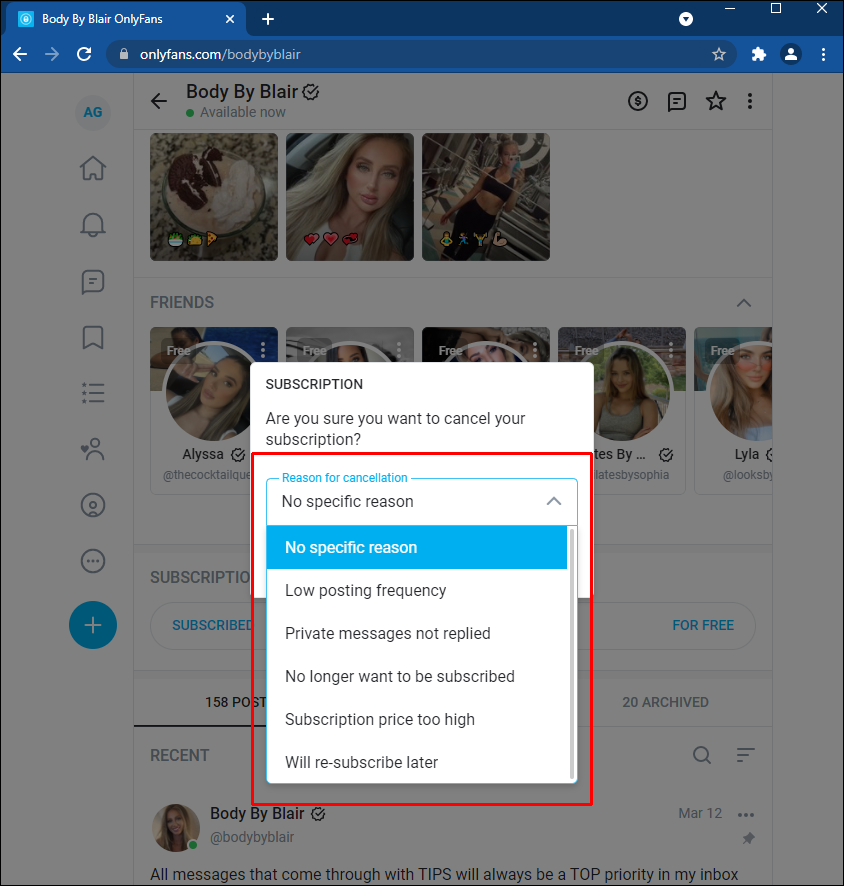
Evidence worth collecting and preserving before you initiate any dispute:
- Screenshots of the subscription page showing the price you agreed to pay
- A dated screenshot of your cancellation confirmation, if you cancelled
- Your card or bank statement showing the disputed charge and its descriptor
- Message history where a creator described what the paid page would include
- Any PPV unlock receipts, since these are separate from the base subscription
- Timestamps for every screenshot, because both channels weigh chronology
Keep this material in one folder. If your first request is declined, the same evidence supports an appeal or a card dispute without starting over, and it protects you from relying on memory weeks later. A reviewer who can follow the timeline without asking questions is far more likely to approve a claim.
Tip: screenshot the subscription price and your cancellation confirmation on the same day you act. Disputes frequently fail not because the subscriber was wrong, but because the timeline cannot be proven later.
Card Issuer Chargeback Rights and Limits
A chargeback is a formal dispute filed with your card issuer, which then investigates the transaction with the merchant’s payment processor. It exists because consumer protection rules give cardholders recourse when a merchant will not resolve a problem directly. Your card issuer sets its own deadline, so check the fine print on your account rather than assuming a fixed window.
Approval is never guaranteed. The issuer weighs your documentation against the merchant’s response, and a well-documented case from the platform’s side can defeat a vague claim. The platform fee structure — 20% to the platform, 80% to the creator — is also irrelevant to your dispute, because your issuer deals with the processor rather than with individual creators.
| Chargeback Category | Required Evidence | Time Window |
|---|---|---|
| Duplicate processing | Two statement entries for one billing period | Issuer-defined, often 60-120 days |
| Charge after cancellation | Cancellation confirmation with a date | Issuer-defined, verify with your bank |
| Unrecognised transaction | Statement plus a written timeline | Shortest window, act immediately |
| Service not delivered | Page screenshots and message history | Issuer-defined, evidence-heavy |
| Incorrect amount charged | Agreed price versus posted amount | Issuer-defined |
Protecting your card details matters here too. If a charge looks unfamiliar, check whether it came from a payment request rather than a page you chose, and treat unsolicited billing messages as a possible sign of phishing before you dispute anything.
Comparing Speed and Certainty Across Pathways
A platform refund usually resolves without account friction but depends on eligibility, while a chargeback bypasses platform policy yet takes longer and invites pushback.
- Platform refund: faster initial response, eligibility-limited, no account penalty
- Platform refund: weaker outcomes for dissatisfaction claims and free-page spending
- Card chargeback: stronger leverage on unrecognised or duplicate charges
- Card chargeback: longer timeline, issuer-dependent investigation
- Card chargeback: higher risk to your account standing if the merchant contests it
- Either pathway: outcome improves sharply with dated documentation
Neither channel reliably recovers money spent on PPV messages, which unlock up to $50 each, or on paid chat that commonly runs $3-$5 per message. These are discrete purchases rather than subscriptions, and both the platform and issuers treat them as delivered digital goods unless something clearly failed on the delivery side.
Because no built-in discovery feed exists, subscribers often arrive at a page through a directory rather than a platform search. That detour makes pre-purchase checks more valuable than post-purchase disputes, which is why experienced subscribers compare candidates through the best onlyfans sites before spending anything, rather than after a charge already posted. Methodology matters here: a directory that states how it orders pages is more useful than one that simply lists names, which is the standard BestOnlyFans applies to its own monthly refresh.
Platform Consequences of Chargeback Use
The platform learns about it when the processor forwards the dispute, and the response can include restrictions on the account that filed it.
Consequences that may follow a chargeback filing include:
- Temporary suspension while the dispute is investigated
- Loss of access to the page tied to the disputed charge
- Removal of stored payment methods from the account
- Restrictions on future subscription purchases
- Permanent closure in cases of repeated or abusive filings
A refund request that fails costs you nothing but time; a chargeback that succeeds can still cost you the account, which matters if you subscribe to several pages at once.
Escalate to your issuer when the platform has declined a legitimate claim, when the charge is genuinely unrecognised, or when the issuer’s deadline is closing — not simply because a platform request feels slow. Persistent account takeover is a separate problem from billing, and it belongs in a different process entirely.
Step-by-Step Decision Framework
Work through these questions in order.
- Is the charge unrecognised or duplicated? If yes, contact your issuer promptly.
- Did you cancel and get charged anyway? Request a platform refund first.
- Is the complaint about content quality or posting frequency? Expect a platform decline.
- Has the platform already declined a legitimate claim? Escalate to your card issuer.
- Is your issuer’s dispute deadline close? File before it lapses, regardless of platform status.
- Do you value the account more than the refund? Stay on the platform channel.
One more consideration applies to subscription pricing. Base prices run from $4.99 to $49.99, with most pages sitting between $4.99 and $15, so a disputed renewal is usually a small amount. Weigh that sum against the value of continued access before escalating a case that the platform might resolve on its own.
Promotional first months are the exception worth knowing, since a discounted first month can fall below $4.99 while the base price cannot. If a promotional rate confused you at checkout, say so plainly in your request and include the page where the offer appeared.

Prevention Through Pre-Purchase Verification
A few minutes of checking before payment removes most of the ambiguity that makes refunds and chargebacks difficult, and two-step authentication on your account adds a layer of protection against unauthorised charges in the first place.
| Verification Source | What to Check | Risk Signal |
|---|---|---|
| Ranking directories | Recent activity notes and page summaries | No updates for months |
| Platform page itself | Stated subscription price before checkout | Price differs from the listing |
| Creator message history | What the paid page promises to include | Vague or shifting descriptions |
| Your own statement | Descriptor used by the payment processor | Unfamiliar billing name |
| Account security settings | Two-step authentication enabled | Login alerts you did not trigger |
Paying attention to price displays, renewal terms, and recent page activity before checkout removes the two most common causes of disputes: unexpected renewals and unmet expectations.
If a page you already pay for suddenly changes its billing descriptor or starts sending unfamiliar payment requests, treat that as a signal rather than an inconvenience.
FAQ
Can I request a refund if a creator stops posting after I subscribe?
The platform treats a subscription as access to a page rather than a commitment to a posting schedule, so a quiet page is not automatically a refundable one.
What documentation does my bank require for an OnlyFans chargeback?
Expect to provide your statement showing the charge, its date and amount, and a written explanation of why it is disputed.
Will OnlyFans ban my account if I file a chargeback?
Not automatically, but restrictions are possible. The account may be suspended during the investigation, lose access to the disputed page, or face limits on future purchases. Repeated or abusive filings carry a higher risk of permanent closure, which is why the platform channel is worth trying first.
How long do I have to dispute an OnlyFans charge with my card issuer?
The window is set by your card issuer, not by the platform, so there is no single universal deadline. Many issuers allow roughly 60 to 120 days from the statement date, and unrecognised charges often have shorter limits.